mHealth & AI
AI in mHealth: Ethical Framework
Case study on ethical and transparent AI integration in mHealth apps – from UX audit to prototype to clear ethical guidelines focusing on trust and user autonomy.
- Role
- UX/UI Designer
- Duration
- 2 months
- Tags
- mHealthAIEthicsPrototyping
1. Goal
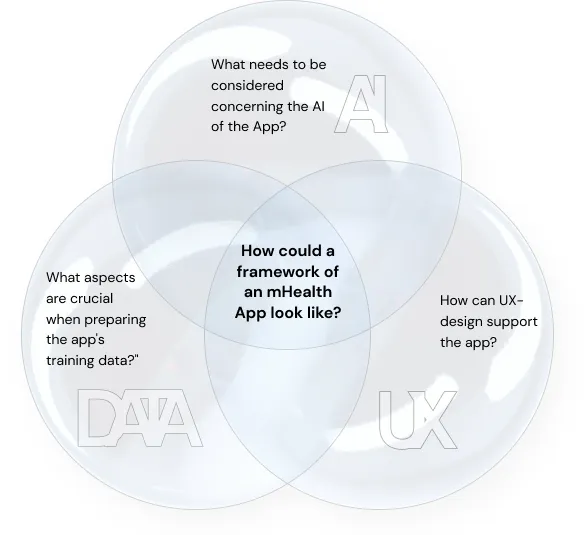
The project's goal was to develop a concept for an mHealth app that integrates AI transparently and ethically while addressing user needs in data, AI, and UX. The process was divided into three phases: deconstruction of existing solutions, reconstruction in the form of our own concept, and final reflection.
2. UX Audit
I analyzed five leading AI-powered mHealth apps regarding navigation, information hierarchy, and onboarding. Although the apps were well-rated in stores (4.1–4.8 stars), privacy was frequently discussed critically. Particularly notable: Despite aggressive marketing of AI, users could barely understand where and how AI was actually being used. This lack of transparency became the central learning of the project: When AI is part of the value proposition, its use must be clearly visible and understandable.
3. Personas & Task Analysis
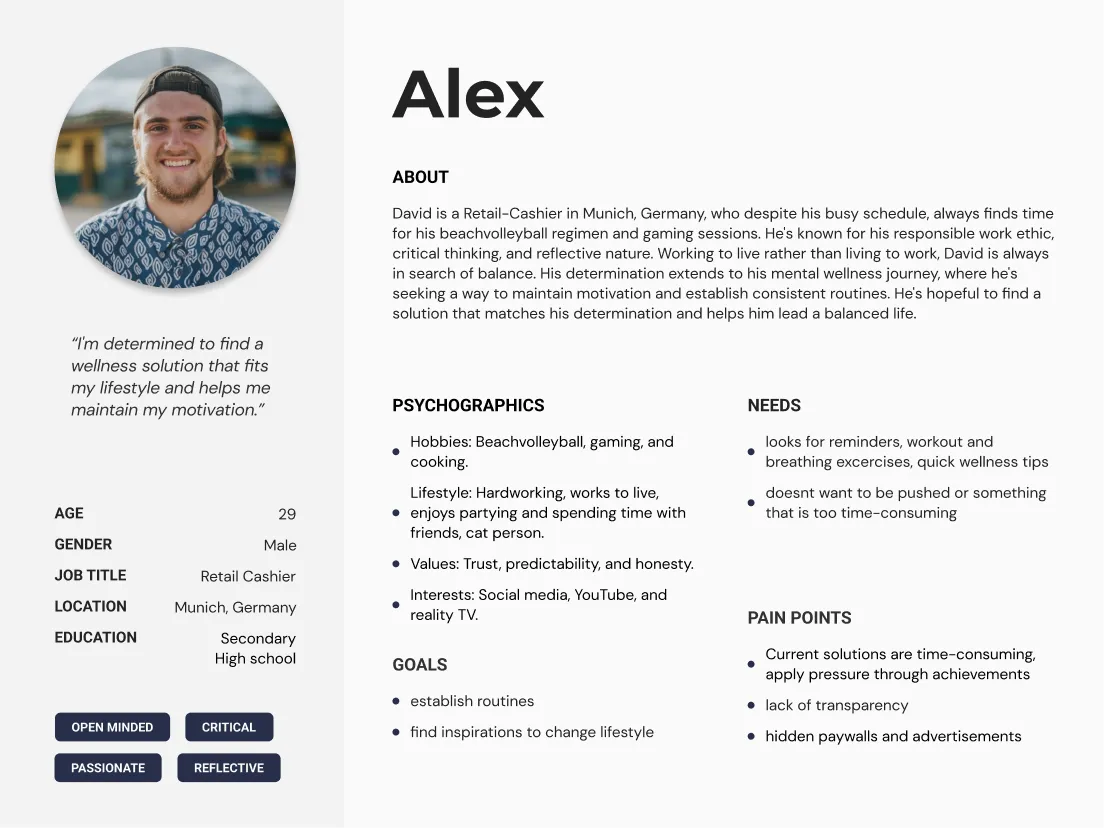
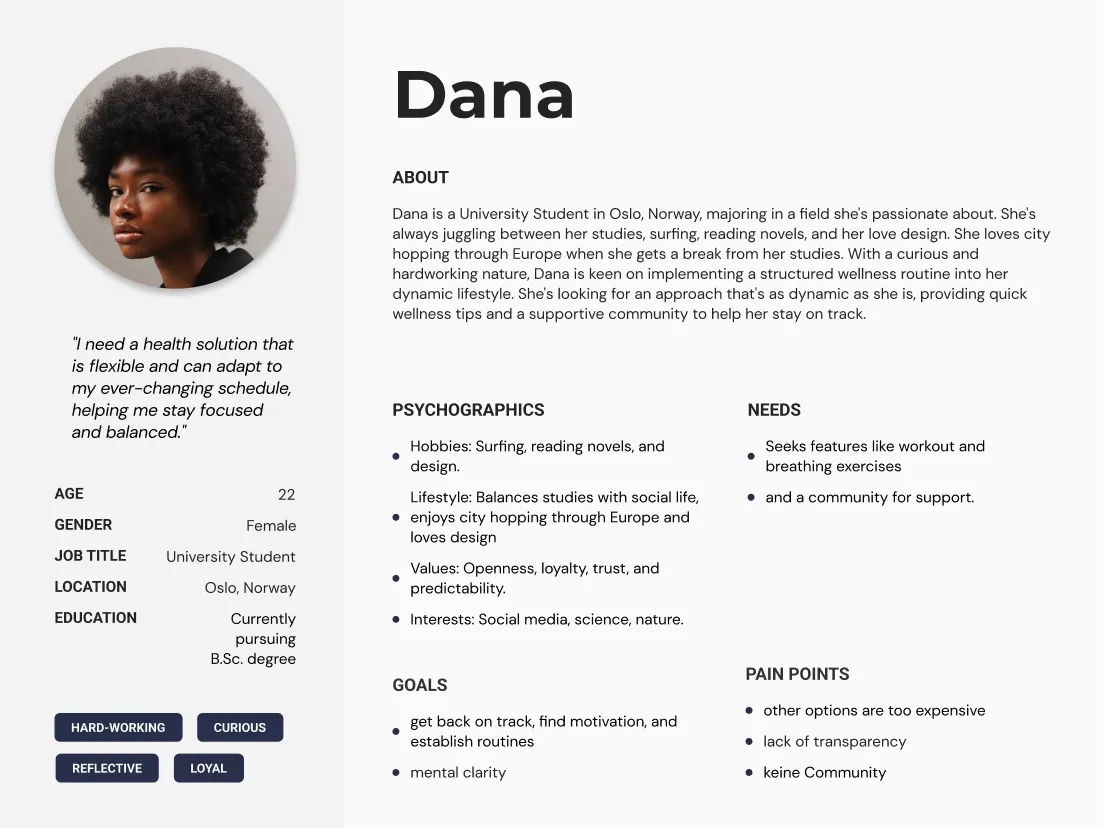
Based on the analysis, I developed two personas (Millennials & Gen Z) representing typical needs and usage patterns. In a team workshop, we then defined the app's core functions. This ensured that design and feature decisions were consistently user-centered.
4. Prototyping
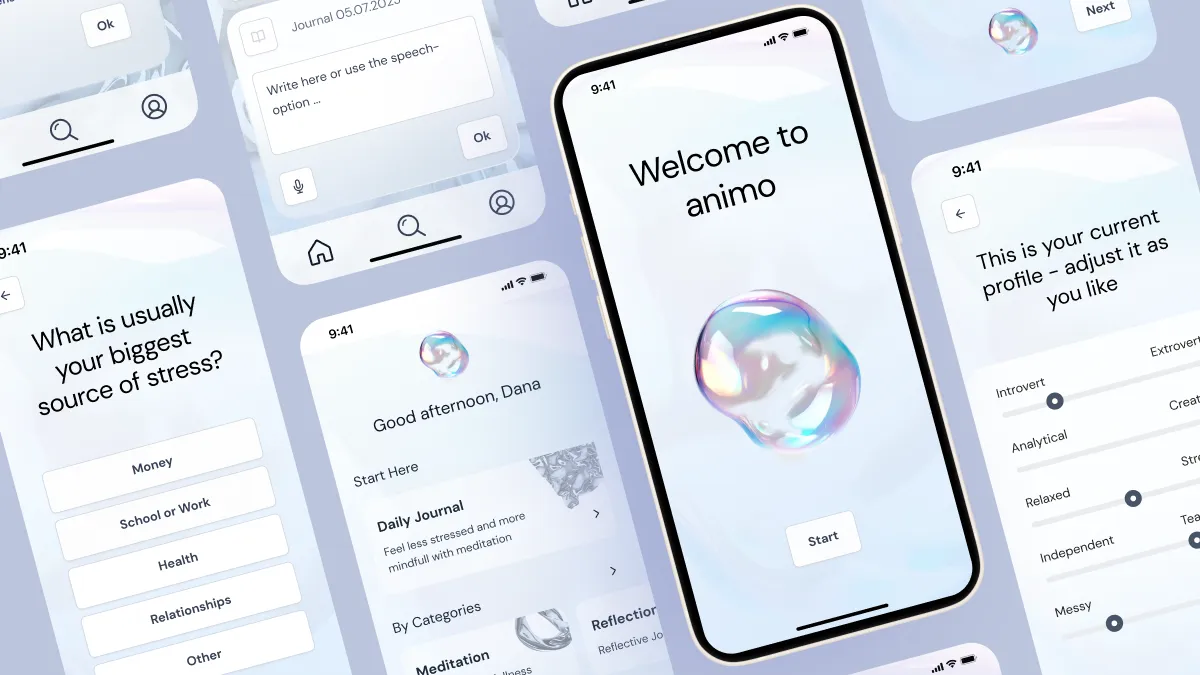
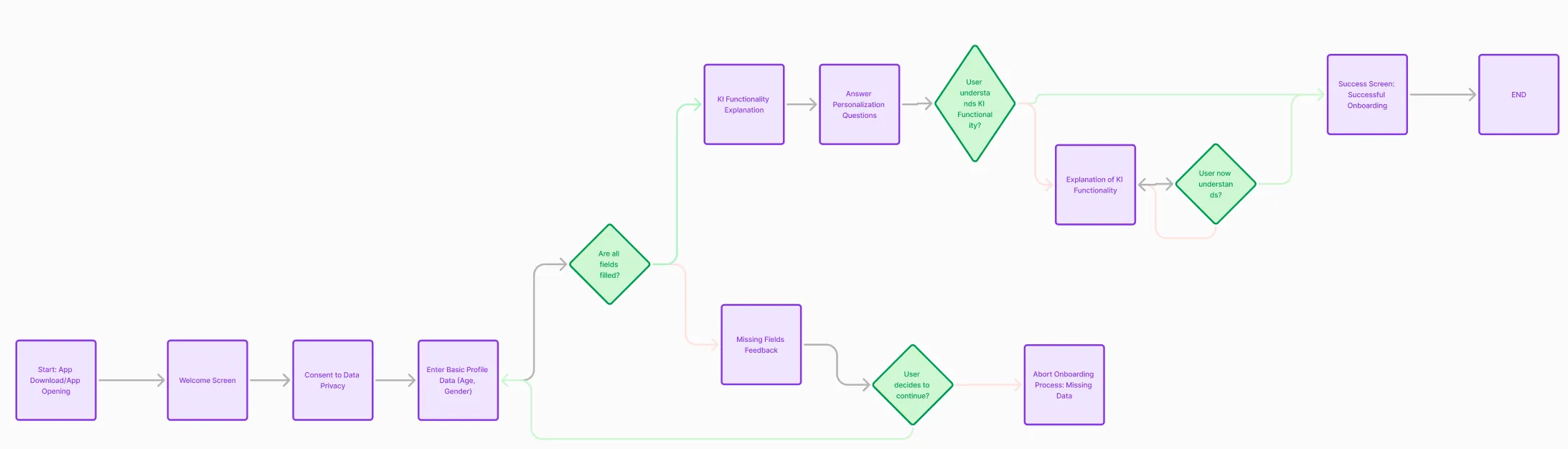
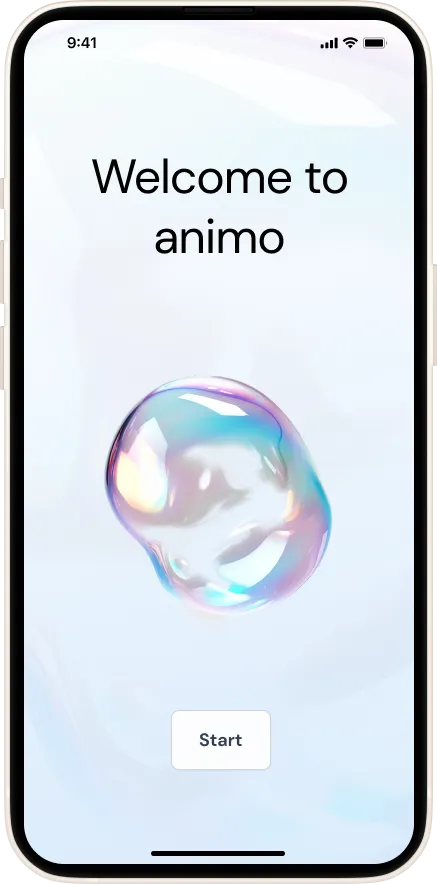
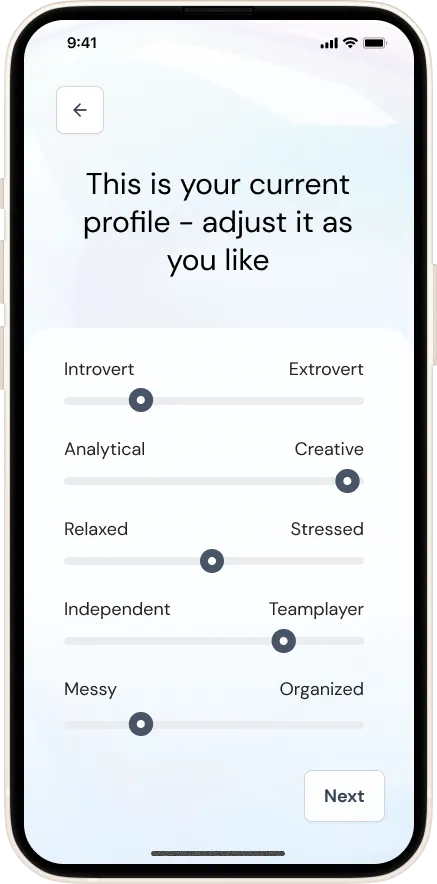
The prototype focused on a clear onboarding flow, personalized user guidance, and explicit labeling of AI features. The interactive Figma prototype translates these principles into a calm, trust-building interface with intuitive navigation. The goal was to make transparency not only content-based but also visually experiential. The prototype successfully served for presenting and discussing the concept.
5. Reflection
The project sharpened my understanding of the risks and responsibilities of AI in mental health. Particularly formative was working with AI-powered personas, where we jointly identified biases in the data. I also learned how strongly design acts as an interface between technology and trust: Transparency arises not only through content but significantly through interface decisions. Deliberately designed UX can make a product's values visible and experiential.
6. Try the Prototype
You can try the interactive Figma prototype yourself here: